


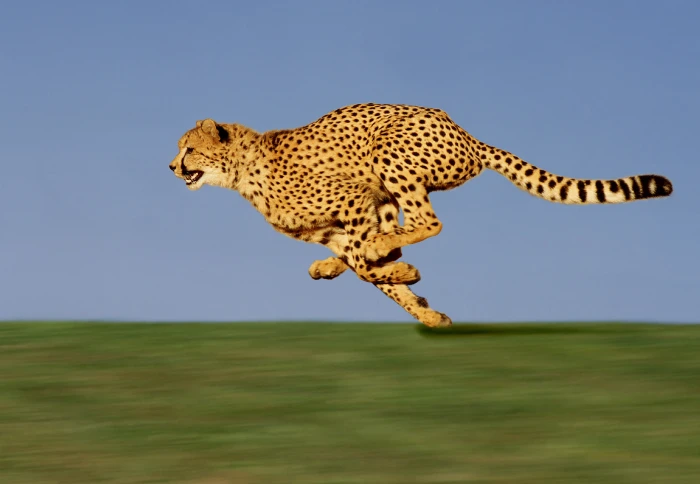
In this comprehensive list, we highlight the top 20 fastest land animals in the world, focusing on each creature's top speed, habitat, physical adaptations, and behavioral traits. Each profile is packed with SEO-relevant terms like "fastest animals on land," "animal top speeds," and "speed comparison in animals," to ensure maximum discoverability and readability.
Table of Contents
- Cheetah – 70 mph (113 kph)
- Pronghorn Antelope – 55 mph (88.5 kph)
- Springbok – 55 mph (88 kph)
- Quarter Horse – 55 mph (88 kph)
- Wildebeest – 50 mph (80.5 kph)
- Lion – 50 mph (80.5 kph)
- Blackbuck – 50 mph (80.5 kph)
- Hare – 48 mph (77 kph)
- Greyhound – 45 mph (72 kph)
- Elk – 45 mph (72 kph)
- Kangaroo – 44 mph (71 kph)
- African Wild Dog – 44 mph (71 kph)
- Ostrich – 43 mph (70 kph)
- Hyena – 40 mph (64 kph)
- Jackrabbit – 40 mph (64 kph)
- Coyote – 40 mph (64 kph)
- Mongolian Wild Ass – 40 mph (64 kph)
- Zebra – 40 mph (64 kph)
- Giraffe – 32 mph (51 kph)
- Warthog – 30 mph (48 kph)
Fastest Land Animals Ranked FAQs
What is the fastest land animal in the world?
The cheetah is the fastest land animal, reaching speeds up to 70 mph (113 kph). These spotted cats can accelerate from 0 to 60 mph in just 3 seconds thanks to their flexible spine, semi-retractable claws, and lightweight build. However, they can only maintain top speed for about 30 seconds before overheating, making them sprint specialists rather than endurance runners.
How fast can the fastest land animals run compared to humans?
The fastest land animals are significantly faster than humans. While Usain Bolt record speed is 27.8 mph (44.7 kph), the cheetah runs at 70 mph—over 2.5 times faster. Even the 20th fastest land animal, the giraffe at 32 mph, still outpaces the world fastest human. Most animals on the top 20 list run between 40-55 mph, nearly doubling human speed capabilities.
Which land animal has the best endurance at high speeds?
The pronghorn antelope is the champion of sustained high-speed running. While cheetahs are faster in short bursts, pronghorns can maintain 45 mph for miles and have been recorded running at top speeds for over 4 miles without stopping. Their massive heart and lungs, plus specialized hooves with shock absorbers, make them the ultimate marathon runners of the animal kingdom.
What makes land animals so much faster than humans?
Fast land animals have evolved specialized adaptations that humans lack: higher proportions of fast-twitch muscle fibers for explosive power, flexible spines that act like springs, aerodynamic body shapes, and specialized feet for traction. Many also have enlarged hearts and lungs for efficient oxygen delivery. Evolution favored speed in these animals for survival, while humans evolved for endurance and versatility instead.
Are there any fast land animals that are not mammals?
Yes! The ostrich is the fastest bird on land, reaching 43 mph (70 kph) despite being flightless. Their long, powerful legs can cover 16 feet in a single stride. Some reptiles like the spiny-tailed iguana can reach 21 mph, and insects like the tiger beetle achieve impressive speeds relative to their size, though their absolute speeds are much lower than large mammals.
How do scientists measure the speed of wild animals?
Scientists use various methods to measure animal speeds: GPS collars that track movement in real-time, high-speed cameras that capture running sequences, radar guns similar to those used for vehicles, and controlled laboratory studies with treadmills. Some measurements are estimates based on stride length and frequency analysis. The most accurate data comes from GPS tracking of animals in their natural habitats.
Which fastest land animal can maintain speed for the longest distance?
The African wild dog excels at sustained high-speed hunting, maintaining around 35-40 mph for several miles while chasing prey. Their pack hunting strategy and incredible cardiovascular fitness allow them to run prey to exhaustion. Unlike sprint specialists like cheetahs, wild dogs have evolved for endurance hunting, achieving an 80% success rate in their hunts through persistent, long-distance chases.
Do the fastest land animals live in specific habitats?
Most of the fastest land animals inhabit open environments like savannas, grasslands, and plains where high speeds are advantageous. African savannas host cheetahs, lions, and various antelopes, while North American plains are home to pronghorns and quarter horses. Open terrain allows animals to reach top speeds without obstacles, and the predator-prey dynamics in these ecosystems have driven the evolution of extreme speed.
Can domesticated animals compete with wild animals for speed?
Some domesticated animals rank among the fastest land animals. The American Quarter Horse reaches 55 mph, placing it 4th on our list, while greyhounds achieve 45 mph. However, most domesticated animals have been bred for traits other than pure speed—like strength, endurance, or temperament. Wild animals generally maintain superior speed capabilities because their survival depends on it, driving continuous natural selection for speed.
What is the difference between sprint speed and sustained running speed?
Sprint speed refers to maximum velocity achieved over short distances (usually under 30 seconds), while sustained speed is the pace an animal can maintain over longer periods. Cheetahs are sprint champions at 70 mph but can only maintain this briefly. Pronghorns have lower sprint speeds (55 mph) but superior endurance, maintaining 45 mph for miles. Different animals excel at different types of speed based on their hunting or escape strategies.