


When most people think of an African safari, their minds instantly jump to the Big Five animals. These giants of the wild dominate landscapes, guidebooks, and bucket lists. Lions roar, elephants march across the plains, and rhinos command attention wherever they appear.
But Africa’s wilderness is not built on giants alone.
Beneath the tall grass, among rocky outcrops, and along dusty game trails lives another cast of characters the smallest wild animals that quietly keep the ecosystem alive. They may not stop safari vehicles in their tracks, but without them, the famous Big Five could not survive.
Table of Contents
Before we look closer, let’s briefly acknowledge the icons.
The Big Five
The Big Five animals include:
- African Lion (Panthera leo)
- African Elephant (Loxodonta africana)
- Rhinoceros (Diceros bicornis and Ceratotherium simum)
- Leopard (Panthera pardus)
- African Buffalo (Syncerus caffer)
These animals symbolize strength, survival, and the raw power of nature. Yet their world depends on much smaller lives working silently in the background.
The Small Five
1. Elephant Shrew (Elephantulus species)

The elephant shrew looks like a creature borrowed from a dream tiny, fast, and equipped with a long flexible snout that resembles a miniature elephant trunk. Despite its size, it is not a rodent but belongs to a unique group of mammals known as sengis.
Where to find it:
Forests, savannas, and rocky areas of East and Southern Africa
What it eats:
Insects such as ants, termites, beetles, and spiders
Lifespan:
About 2 to 4 years in the wild
Reproduction:
Short gestation period of around 45–60 days, usually giving birth to 1 or 2 well-developed young that can move almost immediately
2. Dwarf Mongoose (Helogale parvula)

The dwarf mongoose is Africa’s smallest carnivore, but what it lacks in size it makes up for in personality. Living in close family groups, these animals cooperate, communicate constantly, and take turns standing guard while others forage.
Where to find it:
Open savannas and woodlands across East and Southern Africa
What it eats:
Insects, small reptiles, eggs, and occasionally small rodents
Lifespan:
Approximately 6 to 8 years in the wild
Reproduction:
Gestation lasts about 50 days, with litters of 2 to 4 pups raised communally by the group
3. Rock Hyrax (Procavia capensis)

Often mistaken for a rodent, the rock hyrax holds one of Africa’s most surprising secrets it is one of the elephant’s closest living relatives. These small mammals live among rocks and cliffs, basking in the sun while keeping a sharp lookout for predators.
Where to find it:
Rocky hills, cliffs, and kopjes throughout sub-Saharan Africa
What it eats:
Grasses, leaves, bark, and fruit
Lifespan:
Around 9 to 12 years
Reproduction:
Long gestation period of about 7 to 8 months, producing 1 to 3 young
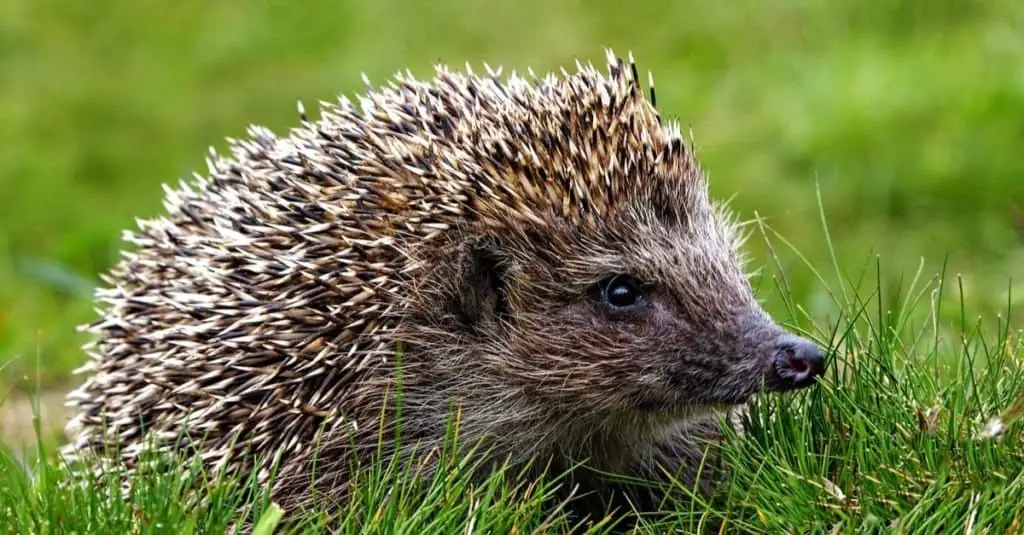
4. Four-Toed Hedgehog (Atelerix albiventris)

Mostly nocturnal and rarely seen during the day, the four-toed hedgehog quietly roams Africa’s grasslands after sunset. When threatened, it curls into a tight ball, using its spines as a natural defense.
Where to find it:
Grasslands and savannas of East and Central Africa
What it eats:
Insects, worms, snails, and small vertebrates
Lifespan:
Around 4 to 6 years in the wild
Reproduction:
Gestation lasts about 35 days, with litters ranging from 2 to 6 young
5. Leopard Tortoise (Stigmochelys pardalis)

The leopard tortoise is one of Africa’s most recognizable reptiles, named for the beautiful spotted patterns on its shell. Slow-moving but long-lived, it represents patience and endurance in the African wilderness.
Where to find it:
Savannas and semi-arid regions of East and Southern Africa
What it eats:
Grasses, succulents, flowers, and fallen fruit
Lifespan:
Commonly 50 to 80 years
Reproduction:
Egg-laying species; females lay clutches of 5 to 20 eggs, with incubation lasting several months
Why These Small Wild Animals Matter
These smallest wild animals may not headline safari posters, but they form the foundation of Africa’s ecosystems. They control insect populations, disperse seeds, recycle nutrients, and provide food for larger predators.
Without them, the Big Five would struggle to survive.
small five animals FAQs
What are the Big Five animals in African safari wildlife
The Big Five animals refer to the African lion, African elephant, rhinoceros, leopard, and African buffalo. These iconic species became famous due to their size, power, and historical hunting difficulty. Today, the Big Five animals represent the ultimate African safari wildlife experience and play a critical role in maintaining ecosystem balance across savannas, grasslands, and forests.
What are the Small Five animals and why are they important
The Small Five animals are the lesser-known counterparts to the Big Five animals and include small wild animals such as the elephant shrew, dwarf mongoose, rock hyrax, four-toed hedgehog, and leopard tortoise. These animals support African safari wildlife by controlling insects, dispersing seeds, and sustaining food chains that larger predators depend on.
Where can you see the Big Five and Small Five animals in Africa
The Big Five animals and Small Five animals can be found across East and Southern Africa, especially in national parks and conservation areas. Countries like Tanzania, Kenya, South Africa, and Botswana offer excellent African safari wildlife viewing. While the Big Five dominate open plains, small wild animals are often spotted near rocks, grasslands, and forest edges.
Why should safari travelers care about small wild animals
Small wild animals are essential to the survival of African safari wildlife ecosystems. They regulate insect populations, enrich soil, and provide food for larger predators including members of the Big Five animals. Observing the Small Five animals adds depth to a safari experience, transforming it from simple wildlife viewing into a deeper understanding of nature and conservation.
How do the Big Five animals depend on smaller wildlife
The Big Five animals rely on healthy ecosystems supported by small wild animals. Species like dwarf mongooses and rock hyraxes influence food chains and vegetation health, which directly affects prey availability and habitat quality. Without the Small Five animals and other small wildlife, African safari wildlife systems would weaken, threatening the long-term survival of the Big Five.